
.png)
A comprehensive look at growing voices
Young voices are constantly growing and changing—and for students and teachers, that change can feel confusing. A singer who was clear and confident last month may suddenly sound hoarse, husky, or unsure of their range. For teachers, these moments raise important questions: What’s normal? What should I adjust? How can I best support this student right now? This course provides a deeper understanding of vocal growth and change in children and teenagers, helping you recognize the stages of development and respond with informed, practical teaching strategies.

Three Instructional Lecture Videos
Includes three, thirty minute lectures on voice growth and change from infancy, through childhood and into adolescents. Includes audio samples of voices at different stages of development.

Includes Course Materials
Includes a detailed 7-page PDF for easy note-taking and review.

Quiz and Certificate of Completion
A certificate of completion is awarded to teachers with a test score of 70% or higher.
.png)
Why Voice Change Looks Different for Every Singer
Voice change does not happen the same way for every young singer. Voices influenced primarily by estrogen tend to grow more gradually, with subtle shifts in range, resonance, and vocal color that still affect comfort and consistency. In contrast, testosterone-led voice change often brings more dramatic and rapid transformation, including significant growth of the larynx, shifting pitch range, and the familiar “cracking” or instability many teachers observe. Understanding these different patterns of development helps teachers recognize what their students are experiencing and respond with appropriate expectations, repertoire choices, and vocal guidance that support healthy singing through every stage of change.
A Quick Preview for Voice Teachers
Learn how voice growth and change actually work —and what that means for teaching children and teens to sing safely and confidently. In this preview, Dr. Jenevora Williams clears up common myths and outlines the difference between the child and adult larynx.
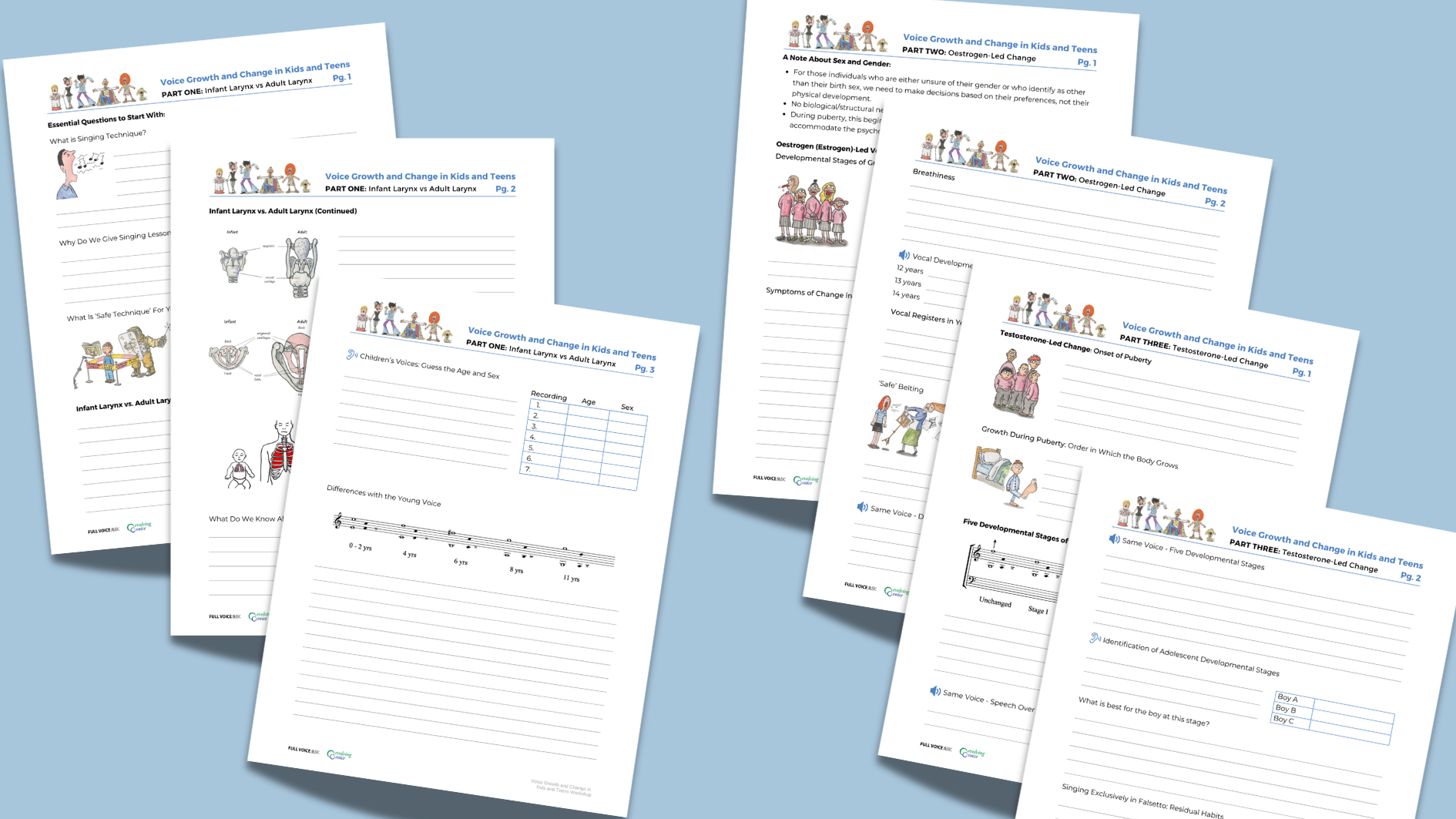
Guided Notes Workbook
This course includes a 7-page guided note-taking PDF designed to help you stay focused, capture key ideas, and turn what you learn into practical strategies you can use immediately.

Meet Jenevora Williams
Dr. Jenevora Williams is a passionate expert in vocal health and singing pedagogy, with pioneering research focused on young singers. Known for her engaging and warm teaching style, she has inspired teachers and singers globally. Dr. Williams co-founded Vocal Health Education, offering accredited vocal health and rehabilitation training. Her acclaimed book, "Teaching Singing to Children and Young Adults," and numerous publications underscore her commitment to advancing the field and supporting young voices.
What Professional Teachers Are Saying
Join hundreds of teacher who have completed this essential training.
Thank you, Dr. Williams! This was invaluable in providing practical and applicable information about infant, child, and adolescent voices. Thank you for synthesizing this information in a practical, digestible way and normalizing the emotional components of child/adolescent singers alongside the physical changes they'll be experiencing. I would recommend this workshop to anyone who works with young singers!
USA
I really appreciated this workshop and feel like it gave me a lot more confidence in my understanding of the changing voice, which will definitely give me confidence in my teaching! Thank you so much for offering this!
Canada
This workshop was AMAZING! …This workshop was a fabulous starting point for me to pair with the experience I have had over the years. I have been wanting more regular professional development as a solo owner of my home studio and this workshop was the sort of thing that I need and want. THANKS A MILLION! I will be back for more :)
USA
Dr. Williams' presentation was clear, relaxed, and concise. The information was presented in such a way that it confirmed what I already knew about voice change in teens in particular, and provided some great details about what comes before that change (infancy, etc.). Listening to singers at various stages of change was also fascinating and very helpful.
USA
Teach young singers with confidence.
Voice change doesn’t have to feel mysterious or uncertain. With a deeper understanding of how voices develop, you’ll be able to support your students with clarity, confidence, and the tools to help them sing freely through every stage of growth.
$99.00